How to know if you snore (even if you sleep alone)
Here is the awkward truth about snoring: the one person who never hears it is the one doing it. So if you are asking "do I snore?" and there is nobody next to you to answer, you are not being paranoid, you are just missing a witness. This guide covers how to know if you snore three different ways, from the least reliable (morning clues) to the most reliable (a recording), and what to do with the answer once you have it. If you would rather skip to the test, Snorely is free to download and will tell you tomorrow morning.
Method 1: the morning clues (a hint, not an answer)
Snoring leaves traces. None of them is proof on its own, but if you tick two or three of these most mornings, it is worth finding out for sure.
- A dry mouth or a sore, scratchy throat when you wake up. This usually means you spent the night breathing through your mouth, and mouth breathing and snoring tend to go together.
- Feeling unrested after a full night. Loud snoring can nudge you toward lighter sleep without fully waking you, so seven hours in bed feel like five.
- A dull headache in the morning. Common enough among snorers to be worth noting, though plenty of other things cause it too.
- Waking yourself with a snort or a gasp. That jolt awake for no obvious reason is often the tail end of a snore.
- Someone in the house keeps their door shut, or moves to the couch. Not a medical sign, but a surprisingly reliable one.
The problem with all of these is that they overlap with a dry bedroom, a blocked nose, a late coffee, or an ordinary bad night. They tell you to look closer. They do not tell you what you will find.
Method 2: ask someone (and ask the right questions)
If there is a partner, a roommate or a family member who has slept within earshot of you, they already know. The trouble is that "yeah, you snore" is not much to work with. Ask these instead, and write the answers down:
- How loud? A soft, steady rumble is a different problem from something that carries through a wall.
- When? All night, or mostly in the first hour, or mostly toward morning? Timing is a clue to the cause.
- In which position? Plenty of people only snore on their back. If that is you, the fix is cheaper than you think, and this guide explains it.
- Every night, or only sometimes?"Only after a few beers" or "only when your allergies are up" is genuinely useful information.
- Did the snoring ever stop suddenly, followed by a gasp? That one matters more than the rest. More on it below.
A partner's report is honest but fuzzy. People are asleep too, or half asleep, and memory of 3 a.m. is not great. It is a good starting point and a poor measuring instrument.
Method 3: record a night (the one that actually settles it)
A microphone does not get tired, does not exaggerate, and does not sleep through it. One night with your phone on the nightstand answers the question, and a week of nights starts to answer the more useful one, which is why.
You have two options, and we cover both in detail in how to record snoring on iPhone. The short version: Voice Memos will capture the night for free, and then you scrub through seven hours of audio looking for the loud parts. A snore recorder app does the scrubbing for you. Either way, the phone goes on the nightstand about an arm's length from your head, plugged in, with the microphone (the bottom edge) pointing toward you.
What a "yes" looks like
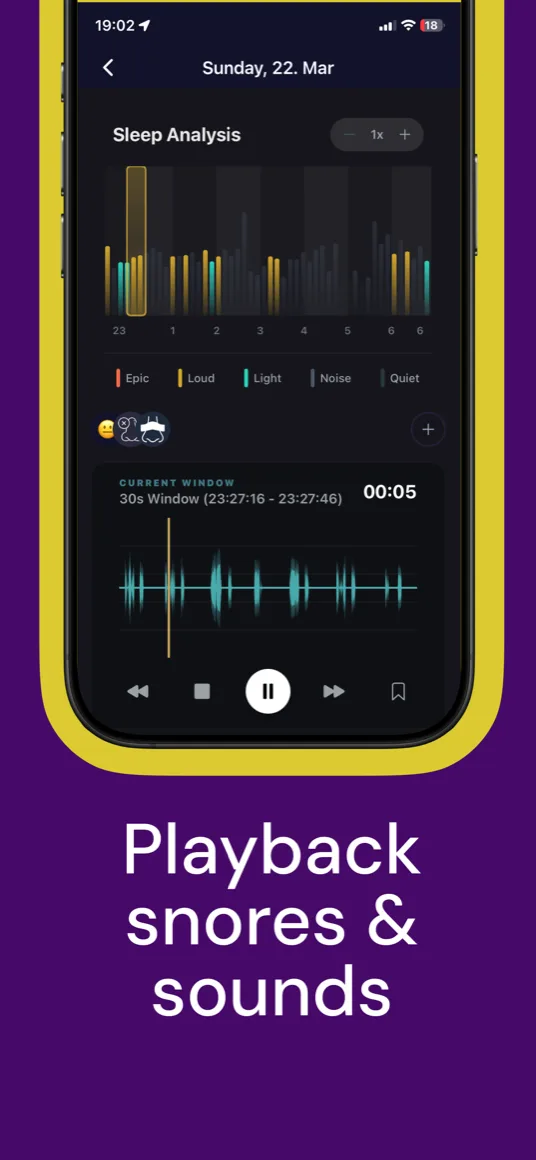
Snoring has a shape. On a waveform it shows up as spikes that repeat in a steady rhythm, roughly once per breath, and keep going for minutes at a stretch. A cough, a creaking bed or a car outside is one spike and then silence. If you see rhythmic clusters that last five, ten, twenty minutes, that is snoring, and you can stop wondering. If you are curious how yours compares, here is what normal snoring measures in decibels.
In Snorely you do not have to read waveforms unless you want to. The morning view gives you a Snore Score from 0 to 100, an hour-by-hour chart of when it happened and how loud each stretch was (from light through loud to what the app calls epic), and the audio clips, so you can hear it yourself. A quiet night looks like a low score and a flat chart. A snoring night is unmistakable.
Why one night is a start, not a verdict
Snoring varies. A cold, a late dinner, a glass of wine or a night on your back can turn a quiet sleeper into a loud one, and the reverse is also true. If your first night comes back quiet, record a few more before you close the case, ideally including a night after a drink or two if that is part of your week. If your first night comes back loud, congratulations, you have your answer, and a week of nights will start showing you what makes it worse.
When "do I snore?" becomes "is this sleep apnea?"
Most snoring is just noise. Sometimes it is a sign of something that deserves a doctor's attention, and a recording is one of the few ways to spot the difference from home. Listen for these:
- Snoring that stops abruptly, a silent pause, then a gasp, snort or choking sound.
- Pauses in breathing that a partner has noticed.
- Waking unrefreshed most mornings, and feeling very sleepy during the day.
- Morning headaches that are the rule rather than the exception.
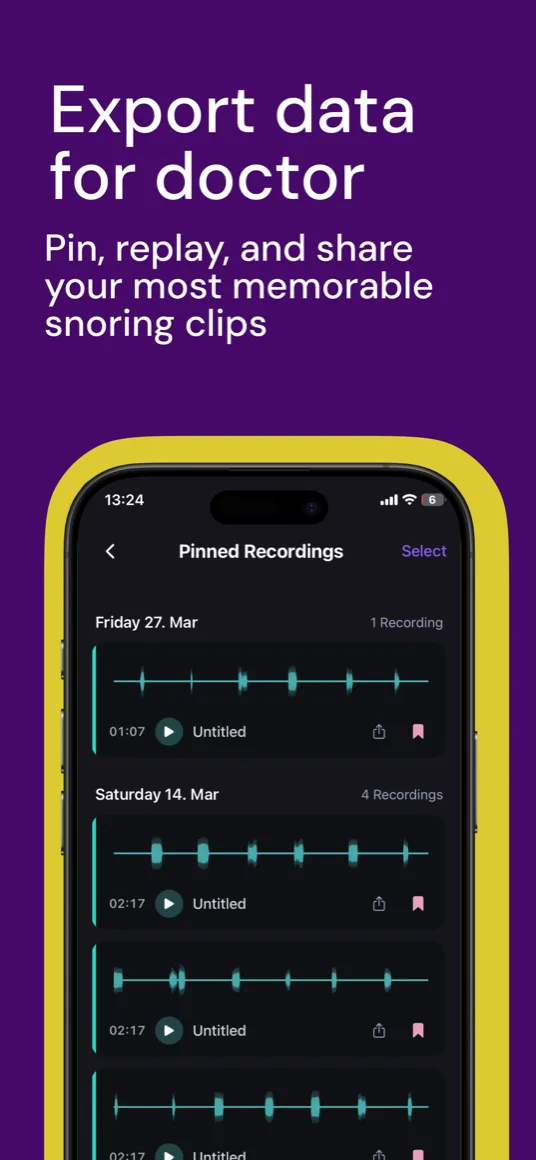
If that describes your nights, read snoring vs sleep apnea, then book an appointment and bring the recording. The NHS page on snoring has a clear list of when to see a GP. To be plain about it: Snorely is a wellness and habit-tracking tool, not a medical device, and nothing on this page is a diagnosis.
That is the whole method: check the clues, ask a witness, then record. The first two are free and take a minute. The third used to mean scrubbing through hours of audio, and now it means putting your phone on the nightstand. Snorely does the listening, the detecting and the sorting, and has your answer waiting when you wake up.
Frequently asked questions
How do I know if I snored last night?
If you recorded the night, open the recording and look for stretches of steady, rhythmic sound that last minutes at a time. If you didn't, the morning clues are all you have: a dry mouth, a sore or scratchy throat, a dull headache, or feeling tired after what should have been enough sleep. None of those is proof, so set up a recording for tonight. Our guide on how to record snoring on iPhone shows the two-minute setup.
Can you snore and not know it?
Yes, and it is the normal case. Snoring happens in the throat while the part of your brain that would notice is asleep. Most people only find out from a partner, a roommate, or a hotel neighbour who didn't enjoy the wall. If you sleep alone there is no one to tell you, which is why so many people go years without knowing. The causes are usually ordinary; our guide to why people snore walks through the common ones.
Is there an app that tells you if you snore?
Yes. A snore recorder app like Snorelylistens through your iPhone's microphone while you sleep, detects each snore, and in the morning gives you a Snore Score from 0 to 100 along with a timeline and the audio clips. It is free to download and there is nothing to wear. Detection runs on the phone, so the audio stays with you. If you want to see the alternatives first, we compared five of them in best snoring apps for iPhone.
Do I snore if I wake up with a dry mouth?
Possibly. A dry mouth in the morning usually means you were breathing through your mouth, and mouth breathing and snoring often travel together. It is not a guarantee, though. A blocked nose, a dry bedroom, or certain medications can do the same thing. Treat it as a reason to record a night, not as an answer. If it turns out you do snore, the remedies guide covers what people try for mouth snoring specifically.
How do I know if my snoring is serious?
Plain snoring is common and usually harmless. The signs worth taking to a doctor are different: gasping or choking sounds, pauses in breathing that you or a partner notice, waking up unrefreshed most days, and feeling very sleepy during the day. If a recording captures any of that, bring it with you. Snoring vs sleep apnea explains the difference in more detail. Snorely is not a medical device and cannot diagnose anything.