Why is my snoring getting worse? 9 common reasons
If you keep asking yourself "why is my snoring getting worse?", or why you have started snoring when you never used to, the answer is almost always that something changed. Your weight, your evenings, your nose, your sleep, your medication or simply your age. Snoring rarely gets louder for no reason, and the useful question is what is different about your nights now compared with a year ago.
Below are the nine changes that most often make snoring worse, a simple way to work out which one applies to you, and the signs that mean you should talk to a doctor instead of a search engine. If you want data instead of guesses, Snorely is free to download and starts building your trend from the first night.
9 reasons snoring gets worse
Snoring is soft tissue in the throat vibrating as air squeezes past it. Anything that narrows the airway or relaxes the muscles around it makes the vibration louder. Each of the changes below does one or both.
1. You have put on some weight
It does not take much. A few extra kilos, especially around the neck, add tissue that presses on the airway when you lie down. The NHS lists being overweight first among the things that make snoring more likely, and it works in reverse too: losing weight is one of the standard recommendations for reducing snoring.
2. You are drinking more, or later
Alcohol relaxes the throat muscles that hold the airway open. A glass of wine at dinner and a nightcap at eleven are very different things for snoring, because the effect is strongest in the first hours of sleep. If your evenings have shifted, that alone can explain louder nights. More on the timing in how alcohol affects snoring.
3. A new medication
Sleeping pills, sedatives and some other medicines that make you drowsy relax the same muscles alcohol does. If your snoring changed around the time you started something new, mention it to your doctor or pharmacist. Do not stop a prescribed medicine on your own because of snoring.
4. Your nose is blocked more often
A blocked nose pushes you to breathe through your mouth, which makes snoring louder. Hay fever season, a new pet, a dusty bedroom or dry air from winter heating can all do it, which is why some people only snore badly at certain times of year. Smoking irritates the lining of the nose and throat as well, and the NHS lists it alongside weight and alcohol.
5. A cold or sinus infection
This one is temporary. Snoring during a cold usually settles within a week or two of the congestion clearing. If it does not come back down afterwards, something else on this list is probably involved.
6. You are getting older
Muscle tone in the throat drops slowly with age, so the airway narrows more easily during sleep. This is why so many people start snoring in their 40s or 50s without changing anything else. You cannot do much about the birthday, but age rarely acts alone, and the other factors on this list stack on top of it. The pillar guide on why we snore covers age and anatomy in more detail.
7. Pregnancy or menopause
Hormones change the airway. During pregnancy, nasal congestion and weight gain make snoring common, especially later on, and it is worth mentioning at your next appointment. After menopause, hormonal changes make snoring and sleep apnea more common in women than before. If either applies to you, that may be the whole answer.
8. You are sleeping less, or worse
A new job, a new baby, shift work or a few months of stress can all shorten your nights. When you finally sleep after a short night, you sleep deeper and the throat muscles are slacker, so the snoring is louder. Catching up on sleep is one of the few fixes on this list that costs nothing.
9. You are sleeping in a different position
A new mattress, a flatter pillow, a sore shoulder or a partner who took your side of the bed can quietly move you onto your back, where most people snore more. If your snoring changed after any of those, the guide on the best sleeping position to stop snoring has the tricks for staying on your side.
Is it really worse, or just more noticed?
Before you blame your throat, check the listener. A new partner, a partner who is sleeping lighter than usual, a move to a smaller bedroom or thinner walls can all make the same snoring seem louder. That does not make it less annoying, but it changes what you fix. This is where a recording earns its place: it does not get more sensitive when it is tired. If you are not sure you snore at all, start with how to know if you snore. If you want to know how your snoring compares with other people's, see how loud snoring usually is.
How to find out what changed
Reading a list of causes only gets you so far, because several of them probably apply. The way to find yours is to treat it like a small experiment.
- Write down what is different. Compared with a year ago: weight, drinking, medication, allergies, sleep hours, bed, pillow, bedroom, who is listening.
- Record a normal week.Same phone, same spot, about an arm's length from your head. This is your baseline. Our guide on recording snoring on iPhone covers the setup.
- Note each night's conditions. Drinks and when, congestion, position if you know it, how tired you were.
- Change one thing at a time. No alcohol for a week, or side sleeping for a week, or a nasal strip for a week. Changing three things at once tells you nothing about which one worked.
- Compare weeks, not nights. Single nights are noisy. A week-on-week difference is the signal.
Done by hand, this means a notebook and many hours of scrubbing through audio files. It works, but most people give up around night four.
Where Snorely fits
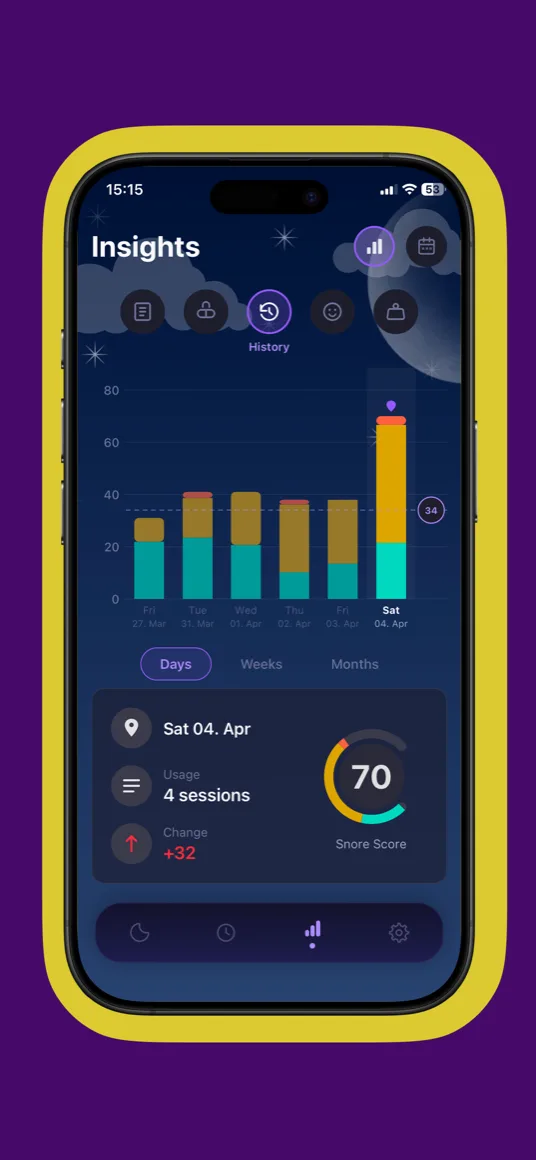
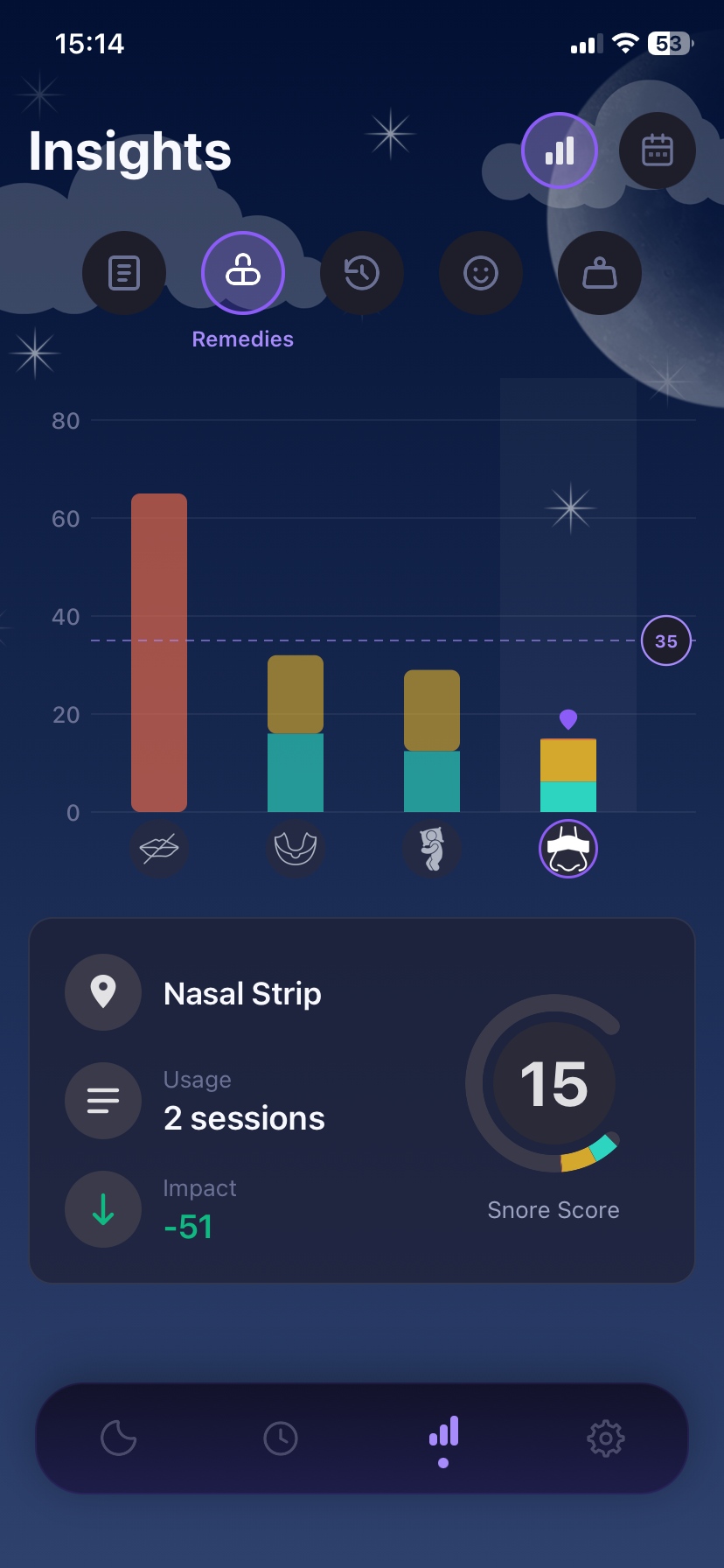
Snorely runs the same experiment without the notebook. It detects your snoring every night and gives you a Snore Score from 0 to 100, with daily, weekly and monthly trends and a calendar heat map, so a slow change over months is visible at a glance. You log factors like alcohol, sleep position and allergies, or add your own, and track remedies like nasal strips, a mouthpiece or mouth tape. Over time the app shows which factors and which remedies moved your score, based on your own nights rather than anyone else's.
It will not tell you why your snoring changed on day one. After a week or two of logging, it usually makes the answer hard to miss.
When worse snoring means see a doctor
Most snoring that gets worse has an ordinary cause from the list above. A few patterns are worth taking to a doctor rather than troubleshooting at home:
- Snoring that got much worse quickly, with nothing obvious to explain it.
- Pauses in breathing, or gasping and choking sounds, that a partner has noticed.
- Heavy daytime sleepiness, or waking unrefreshed most mornings.
- Morning headaches that have become the rule rather than the exception.
These can be signs of sleep apnea, which is explained in snoring vs sleep apnea. Bring a few recordings to the appointment; Snorely can also export a PDF report of your nights. To be plain about it: Snorely is a wellness and habit-tracking tool, not a medical device, and nothing on this page is a diagnosis.
Frequently asked questions
Why have I started snoring all of a sudden?
Snoring that appears out of nowhere usually follows a change: a cold or allergy season, a few kilos of weight, more evening drinks, a new medication, a run of short nights or a new sleeping position. Go through the list on this page and ask what is different from a few months ago. If nothing changed and the snoring comes with gasping or daytime sleepiness, see a doctor. The general causes are in our guide on why people snore.
Why is my snoring worse some nights?
Because the things that drive it change from night to night. Alcohol in the evening, sleeping on your back, a blocked nose and being overtired are the usual suspects, and they often stack: a late dinner with wine after a short night is a classic loud night. Recording a week and noting what each night had in common is the quickest way to see your pattern. The alcohol guide explains why timing matters so much.
Does snoring get worse with age?
Often, yes. Muscle tone in the throat drops gradually with age, so the airway narrows more easily during sleep, and many people notice snoring starting or getting louder in their 40s and later. Age is not something you can change, but the factors that stack on top of it, like weight, alcohol and sleep position, usually are. The remedies guide covers which fixes have the best evidence behind them.
Why is my partner's snoring getting worse?
The same reasons apply, so start with the list on this page together. It is also worth checking whether it is really worse or just more noticeable to you: if you are sleeping lighter, stressed or have moved to a smaller room, the same snoring can feel louder. A recording, made with their agreement, settles it. Our guide on how to record snoring on an iPhone shows the setup.
Can worsening snoring be a sign of sleep apnea?
It can. Snoring that gets louder over months, especially with pauses in breathing, gasping or choking at night and heavy sleepiness during the day, is worth checking with a doctor. Most worsening snoring has an ordinary cause, but the combination of those signs is the exception to look out for. Our guide to snoring vs sleep apnea explains the differences. Snorely is not a medical device and cannot diagnose sleep apnea.